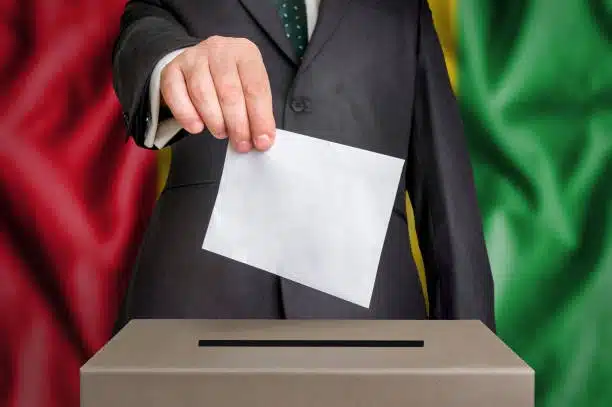
Guineans voted in the presidential election on December 28, 2025. This poll marked the first national vote since the 2021 military coup. President Mamady Doumbouya arrived at a polling station in Conakry to vote. He was accompanied by his wife, Lauriane Doumbouya. The couple cast their ballots together under heavy security. This election was seen as a major turning point for the nation. It aimed to formalize the return to civilian governance after years of transition. Supporters gathered at the polls to catch a glimpse of the first couple. Many citizens hoped the vote would bring lasting peace to the country. The presence of international observers added weight to the historic day. Security forces remained on high alert throughout the voting process in the capital.
Military Leader Transitions to Civilian Candidate
Doumbouya seized power four years ago by ousting Alpha Conde. He initially promised not to run for the presidency himself. He claimed his mission was to restore democracy and step aside. However, a new constitution later cleared the way for his candidacy. This charter replaced the transition rules agreed upon after the coup. Supporters celebrated his move as a step toward national stability. They argued that his leadership was necessary for ongoing projects. Critics pointed out that this move contradicted his earlier public vows. The transition from military general to civilian leader was closely monitored globally. His campaign focused on his role as a unifying national figure. He traded his military fatigues for traditional civilian robes during the trail.
The Role of First Lady Lauriane Doumbouya
Lauriane Doumbouya is a former member of the French National Gendarmerie. She previously served in the prestigious Republican Guard in Paris. Her military background has made her a unique figure in Guinean politics. She has actively supported her husband throughout the political transition period. Her presence at the polls signaled strong family unity for the campaign. Many view her as a bridge between Guinea and European partners. She often engages in social welfare programs across the various regions. Her professional history as an investigator has garnered much local curiosity. Some analysts believe she provides a steadying influence on the presidency. She has mastered the art of public diplomacy over the last years. Her background remains a topic of significant interest for international journalists.
Landslide Victory with Overwhelming Majority
Official results showed Doumbouya won a massive landslide victory. He secured approximately 86.72 percent of the total valid votes. His closest challenger received only about 6 percent of the vote. The Supreme Court validated these final results on January 4, 2026. This win gives him a fresh seven year presidential mandate. The margin of victory was one of the largest in history. Supporters filled the streets of Conakry to celebrate the legal validation. The government praised the efficiency of the newly formed electoral commission. This lopsided result effectively ended any chance of a second round. The president thanked the voters for their overwhelming show of confidence. His administration now prepares to implement a long term national vision.
High Turnout Despite Calls for Boycott
Electoral authorities reported a high voter turnout of nearly 81 percent. About 5.6 million people participated in the historic voting process. Some urban areas saw quieter polls due to opposition protest calls. However, many young voters expressed hope for future economic growth. The government described the high participation as a success for democracy. Authorities claimed that the figures proved a desire for institutional change. Polling stations in rural areas reported long queues early in the morning. Many elders were seen casting their ballots with great pride. The high turnout was used to justify the legitimacy of the results. Officials stated that the people chose participation over political strikes. This high level of engagement was surprising to many political analysts.
Opposition Groups Denounce the Election Process
Many opposition parties labeled the entire election a complete sham. Several prominent rivals were excluded from the ballot on technical grounds. Others were forced into exile before the campaign even began. Critics argue the military maintained too much control over the process. They claim the lopsided result does not reflect true public will. Opposition leaders alleged that ballot stuffing occurred in several key regions. They expressed concern over the lack of independent media coverage. International human rights groups noted the arrest of several key activists. Protests broke out in some suburbs shortly after the initial counts. The opposition has vowed to continue challenging the government through legal means. They urged the international community to not recognize the final tallies.
Economic Stakes and Mining Potential
The election is seen as a test for Guinea’s mining sector. The country is the world’s largest exporter of bauxite. Doumbouya has focused heavily on the massive Simandou iron ore project. Investors hope the new mandate will bring long term political stability. Economic growth is projected to reach double digits in 2026. The government believes this project will transform the national infrastructure. A new trans-Guinean railway is already under construction for ore transport. The president promised that mining wealth would benefit all social classes. Many citizens look to the mines as a source of national hope. Global steel markets are closely watching the progress of the site.
Preparations for the Official Inauguration
The official inauguration ceremony is scheduled for January 17, 2026. It will take place at the General Lansana Conte Stadium. This ceremony marks the formal end of the post coup transition. Security forces are already preparing for the large crowds in Conakry. Workers are decorating the city streets with national flags and banners. High level delegations from neighboring West African states have confirmed attendance. The capital is undergoing a rapid cleanup to welcome foreign guests. This day will signify the start of a new political era. Many residents are excited to witness the military to civilian handover.

International Reactions and Future Sanctions
The African Union is now reviewing the current sanctions on Guinea. Regional leaders hope for a full return to constitutional order. Some Western nations expressed concern over the lack of political inclusion. They urged the new government to protect civil liberties and media. The world remains watchful as the new administration begins its term. Diplomatic channels are working to re-integrate Guinea into regional trade blocs. Some aid organizations have conditioned future funding on democratic progress. The United Nations has called for a national dialogue with the opposition. Investors are relieved to see a clear path forward for the country. Many believe that stability is more important than perfect electoral processes. The global reaction remains mixed as the inauguration date nears.
Conclusion
The 2025 election has solidified Mamady Doumbouya’s hold on power in Guinea. His transition from military ruler to elected president is now complete. While the opposition remains critical, the official results show broad support. The nation now looks toward the inauguration and future economic reforms. Guinea stands at a pivotal moment in its modern political history. The success of the Simandou project remains a top national priority. The role of the First Lady continues to evolve in public. Stability will be the key focus for the next seven years. Challenges remain regarding political inclusion and social justice for all. The people of Guinea hope for a prosperous and peaceful future. The world will watch how this new chapter unfolds for the nation.