As we navigate through the early weeks of 2026, the era of baggage leniency for families has officially come to an end. Airlines worldwide have begun a coordinated crackdown on carry-on dimensions, weight, and even the number of special items allowed for infants. For parents, what used to be a simple process of stowing a diaper bag and a foldable stroller has turned into a high-stakes game of inches and ounces. With new gate-scanning technology and stricter enforcement of fare-class limitations, failing to prepare for these changes could mean starting your family vacation with triple-digit gate-check fees or losing essential gear at the boarding door.
The New Precision of Automated Gate Sensors
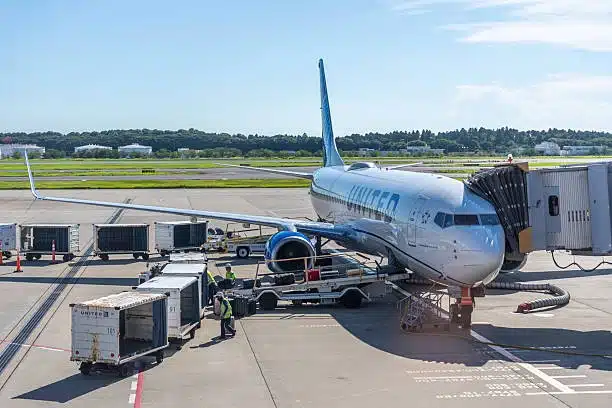
The most significant change facing travelers this year is the replacement of human judgment with automated laser sensors. Historically, gate agents might have ignored a slightly overstuffed diaper bag or a bulging backpack if they saw a parent struggling with a toddler. In 2026, however, many major terminals have installed digital sizer frames that scan bags as passengers move through the boarding line. These sensors measure the total volume of an item, including wheels, handles, and external pockets. If a bag exceeds the standard dimensions by even a fraction of an inch, the system automatically flags the passenger’s boarding pass, requiring a mandatory gate-check fee.
Weight Enforcement and the Hidden Cost of Essentials
While American carriers have traditionally been more relaxed about carry-on weight, 2026 marks a shift toward the stricter weight limits common in Europe and Asia. Many airlines now enforce a strict ceiling of 7kg to 10kg (15lb to 22lb) for cabin luggage. For parents, this is particularly challenging because toddler essentials (ranging from heavy-duty wipes and multiple changes of clothes to tablets and portable chargers) add up quickly. In some cases, airlines are even weighing the combined total of a carry-on suitcase and a personal item. If the weight exceeds the limit, parents are forced to check their bags at the gate, often at prices that have risen to $100 or more per item.
The Reclassification of Diaper Bags
The status of the diaper bag as a free “additional item” is no longer a universal guarantee. In 2026, many budget and international carriers have reclassified the diaper bag to count as a standard personal item. This means that if a parent is already carrying a laptop bag or a purse, the diaper bag is viewed as a second item, triggering an immediate excess baggage charge. Some airlines now require that all infant supplies fit within the parent’s own single baggage allowance unless a separate seat has been purchased for the child. Parents flying on “Basic Economy” or “Lite” fares must be especially vigilant, as these tickets often prohibit any overhead bin space entirely, meaning the diaper bag must be small enough to fit under the seat in front.
Stroller Restrictions and Overhead Bin Wars
Compact, cabin-approved strollers have become a must-have for traveling parents, but the rules surrounding them are tightening. By 2026, many airlines have introduced specific dimension requirements for strollers in the cabin, typically capped at 56 x 36 x 23 cm. Even if a stroller is marketed as “cabin-safe,” flight crews are increasingly forcing parents to gate-check them if the overhead bins are nearing capacity. Furthermore, larger strollers, jogging strollers, and non-collapsible models are now strictly relegated to the cargo hold. Some carriers have even introduced weight limits for gate-checked strollers, meaning that heavy “travel systems” may now incur overweight baggage fees previously reserved for suitcases.
Prohibitions on Child Comfort Devices
A growing number of airlines have updated their safety protocols in 2026 to ban popular child comfort items. Devices such as inflatable leg-rest cushions, footstool suitcases like the JetKids BedBox, and hammock-style seat extenders are now prohibited by major carriers including Delta and Air Canada. The primary concern cited by aviation authorities is that these items can block access to the aisle or interfere with emergency exit paths. While some parents swear by these tools for long-haul flights, bringing them on board now carries the risk of having them confiscated by the crew before takeoff, leaving parents without their planned sleep solution.
Security Screening and the 3D Scanner Transition
There is, however, a silver lining at the security checkpoint. The widespread rollout of advanced CT (3D) scanners in 2026 has simplified the process for carrying baby liquids. At many major airports, parents no longer need to remove milk, formula, or baby food from their bags for inspection. The sensors can now distinguish between liquid explosives and organic compounds like breast milk. While the 100ml (3.4oz) rule still applies to general liquids, the exemption for “medically necessary” baby supplies remains. However, parents should be aware that larger quantities of powdered formula (exceeding 350ml or 12oz) may still require a separate manual search at airports that have not yet upgraded their technology.
The Identity and REAL ID Factor for Families
In the United States, the final implementation of REAL ID requirements in 2026 adds another layer of complexity to family boarding. While children under 18 generally do not need their own REAL ID-compliant identification for domestic travel when accompanied by an adult, their presence must be correctly logged in the airline’s digital manifest. Any discrepancy between the baggage allowance listed on a parent’s digital ID and the physical number of bags at the gate can lead to delays. Carriers are increasingly using “digital identity” checks to ensure that passengers aren’t using a child’s free “lap infant” status to bypass baggage fees for adult gear.
Strategic Packing for the 2026 Landscape
To navigate these tightening rules, a modular packing strategy has become essential. Modern parents are advised to use slim, compressible packing cubes to organize their gear. By placing “must-have” items like medication, a single change of clothes, and a few diapers into a removable cube, parents can stay prepared even if they are forced to gate-check their primary bag at the last minute. Additionally, utilizing wearable storage (such as vests or jackets with large pockets) allows parents to move heavy items from their bags to their person, as items worn on the body do not count toward weight or bag limits.
Monitoring Mobile Alerts and Capacity Warnings
The digital tools provided by airlines have become the best defense against surprise fees. In 2026, most airline apps provide real-time “Overhead Bin Capacity” alerts starting about an hour before boarding. If the app signals that space is low, parents can often volunteer to check their carry-on bags at the ticket counter for free. This is a much better alternative than waiting until the boarding gate, where the same bag might be subjected to a strict sizing scan and a high “mandatory check” fee. Keeping a close eye on these notifications can save a family hundreds of dollars over the course of a round-trip journey.
Final Preparations Before Heading to the Airport
The golden rule for family travel in 2026 is that the days of “winging it” are over. Before leaving for the airport, parents must manually measure their bags (including wheels) and weigh them using a digital scale. Relying on “carry-on approved” labels from luggage manufacturers is risky, as airline standards have shifted faster than the manufacturing cycle. By verifying the specific infant baggage policy for every leg of the journey and preparing for the possibility of a gate-check, families can ensure that the boarding process remains a minor hurdle rather than a vacation-ruining expense.