France has introduced an advanced artificial heart that could change the future of heart disease treatment. The device is called Aeson, and it was developed by the French medical technology company CARMAT. It is designed for people with severe heart failure who may not receive a donor heart in time.
Many online posts describe it as an artificial heart that can “beat forever.” That description is not medically proven. The goal of the device is to work for a very long time and reduce the need for donor hearts, but researchers are still studying its long-term performance. Even so, this technology is a major step forward in heart care.
What Is the Aeson Artificial Heart?

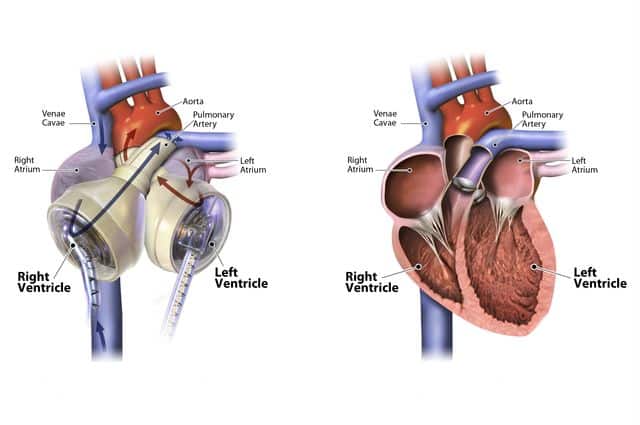
The Aeson artificial heart is a complete replacement for a damaged human heart. It is used in patients with advanced heart failure when the heart can no longer pump enough blood.
Unlike older mechanical hearts, Aeson uses smart sensors that automatically change the blood flow based on the patient’s activity. If the person walks, climbs stairs, or rests, the artificial heart adjusts its pumping speed to match the body’s needs.
Why Was This Artificial Heart Created?
Heart disease is one of the leading causes of death around the world. Every year, thousands of people wait for heart transplants. Sadly, there are not enough donor hearts available.
Doctors created the Aeson artificial heart to help people who cannot wait for a transplant. It offers another treatment option for patients whose own hearts have stopped working properly.
How Does It Work?
The Aeson artificial heart combines engineering and medical science.
Some of its main parts include:
- Two pumping chambers that replace the natural heart.
- Smart sensors that monitor blood flow.
- Biological materials that reduce the risk of blood clots.
- An external battery and power system that keeps the heart working.
The sensors allow the device to respond automatically as the body’s needs change throughout the day.
Can It Really Beat Forever?
This question has attracted a lot of attention.
The phrase “beat forever” should not be taken literally. Scientists hope the device will last for many years, but no artificial heart has been proven to work forever.
The Aeson heart is still being tested and improved. Early studies have shown encouraging results, but researchers continue to collect data to measure its long-term safety and durability.
Main Features
The Aeson artificial heart offers several advanced features.
Smart Blood Flow
It automatically changes blood circulation according to the patient’s activity level.
Natural Pumping Motion
The device copies the pumping action of a real human heart instead of providing constant blood flow.
Reduced Need for Donors
Patients may receive treatment without waiting for a matching donor heart.
Portable Power Supply
Patients carry external batteries that provide continuous power while allowing daily movement.
Advanced Materials
Special biological materials help lower the chance of blood clot formation.
Benefits for Patients
The artificial heart offers several possible benefits.
- Gives hope to patients with severe heart failure.
- May reduce waiting time for heart transplants.
- Supports normal blood circulation.
- Helps improve daily activities.
- Offers another option when donor hearts are unavailable.
For many families, this technology could provide extra time while waiting for a transplant or, in some cases, serve as a long-term treatment.
Current Clinical Progress
French hospitals have already implanted the Aeson artificial heart in several patients through clinical studies.
Doctors continue to monitor patients to study safety, survival, and quality of life. The device has also received approval for specific medical use in Europe, while additional studies continue in other countries.
Challenges
Although the technology is impressive, it still has some limits.
- It requires major surgery.
- Patients must carry an external power source.
- Regular medical checkups are necessary.
- The device is expensive.
- Long-term results are still under study.
Doctors carefully evaluate each patient before recommending an artificial heart.
Could Artificial Hearts Replace Human Donors?
Artificial hearts may reduce the need for donor hearts in the future, but they are unlikely to replace human heart transplants completely anytime soon.
Many patients still benefit from receiving a real donor heart. Artificial hearts are currently used mainly for people with advanced heart failure who have limited treatment options. Researchers continue working to improve these devices every year.
The Future of Artificial Hearts
Medical technology is advancing quickly.
Future artificial hearts may become:
- Smaller and lighter.
- More energy efficient.
- Longer lasting.
- Easier to implant.
- Better at copying the natural heart.
Scientists also continue research into tissue engineering and lab-grown organs. These advances may give patients more treatment choices in the coming years.
Conclusion
France’s Aeson artificial heart marks an important step in modern medicine. It offers new hope for people living with advanced heart failure and helps address the shortage of donor hearts.
Although claims that it can “beat forever” are not supported by current medical evidence, the technology has shown promising results and continues to improve through clinical research. As studies continue, artificial hearts could become an important part of future heart disease treatment and save many lives around the world.
Other Articles

NEW VISA LETS YOU VISIT SIX GULF COUNTRIES ON ONE PERMIT