
In a major escalation of global tensions, the leadership of the Islamic Republic of Iran officially declared a state of “full-fledged war” against the United States, Israel, and European powers in early 2026. President Masoud Pezeshkian voiced this declaration in an interview on the official website of Supreme Leader Ayatollah Ali Khamenei. He frames the current international pressure on Iran as a comprehensive existential attack. The statement comes as Iran faces unprecedented internal unrest and significant external military and economic containment. This rhetorical shift marks one of the most volatile periods in Middle Eastern diplomacy in decades.
The Context: A Multifaceted Attack on the Nation
Iranian leaders characterize the recent surge in Western sanctions, trade blockades, and covert operations as a “full-scale” offensive. President Pezeshkian explicitly contrasted this environment with the clear military lines of the 1980–1988 Iran-Iraq War. He argues that today’s “war” targets Iran’s economy, culture, and internal stability simultaneously. The regime views the reimposition of United Nations “snapback” sanctions in late 2025 as a direct attempt by France, Germany, and the UK to cripple the nation. From Tehran’s perspective, these actions constitute acts of open hostility rather than mere diplomatic disagreements.
Rising Tensions and the June 2025 Conflict
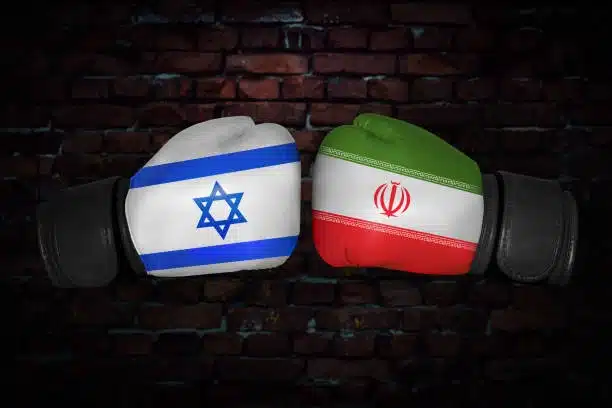
The declaration follows the aftermath of a brief but intense 12-day military conflict in June 2025. During that period, Israel conducted “Operation Rising Lion,” a series of targeted strikes on Iranian military and nuclear infrastructure. These strikes killed approximately 1,100 Iranians, including senior Revolutionary Guard commanders and nuclear scientists. In 2026, the Iranian leadership maintains that its military has since reconstituted and grown stronger. This lingering trauma fuels the regime’s belief that a decisive response is necessary to deter further Western or Israeli incursions.
Internal Unrest: Protests and “Internal War”
The declaration of war against external enemies coincides with a severe wave of nationwide protests. Triggered by a collapsing economy and record-low currency values, demonstrations spread to all 31 Iranian provinces in early 2026. The regime responds with unprecedented force, leading Justice Minister Amir Hossein Rahimi to label the unrest an “internal war” fueled by foreign “terrorist elements.” By declaring war with the West, the leadership attempts to frame domestic dissent as a foreign-led conspiracy. This narrative justifies harsher crackdowns on its own citizens.
The Role of the United States and the Trump Administration
The return of Donald Trump to the U.S. Presidency significantly altered the strategic calculus in the region. The administration adopted a “maximum pressure” 2.0 approach, signaling a readiness to intervene if the regime continues violent crackdowns on protesters. While President Trump has recently hinted at de-escalation, the U.S. military remains postured for potential strikes on Iran’s nuclear and missile programs. The Iranian Defense Council warns that any tangible U.S. threat will meet with “preemptive action.” This environment compresses diplomatic timelines and leaves little room for traditional negotiation.
Europe and Israel: A Unified Front in Tehran’s Eyes
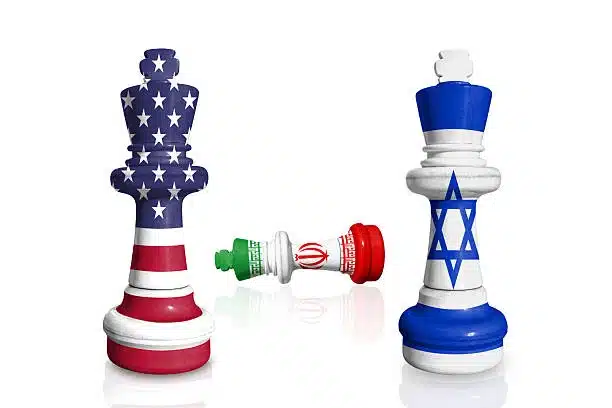
For the first time in years, the Iranian leadership categorizes Europe alongside the U.S. and Israel as a singular hostile entity. This shift stems largely from the European “E3” powers triggering the snapback mechanism that brought back binding UN sanctions. Israel, under Prime Minister Benjamin Netanyahu, reaffirmed its commitment to preventing Iran from re-establishing its missile or nuclear capabilities. The perception of a unified Western-Israeli front leads Tehran to seek closer strategic alliances with Russia and China. In January 2026, Iranian officials increasingly signal that their “red lines” regarding sovereignty and nuclear development remain absolute.
Economic and Global Consequences of the Declaration
The “full-scale war” rhetoric sends ripples through global energy markets and the international banking system. Iranian leaders reportedly move currency reserves abroad in anticipation of a potential total financial blockade. For the average Iranian citizen, the impact manifests through skyrocketing inflation and shortages of basic goods like medicine and fuel. Regionally, the instability threatens to pull in neighboring countries, as Gulf states fear catching the crossfire of an Iranian retaliation. The possibility of a miscalculation on either side remains high while traditional back-channels of communication appear increasingly frayed
Diplomatic Stalemate and the Nuclear Red Line
Efforts to revive nuclear negotiations have reached a complete standstill in early 2026. Iran refuses to allow IAEA inspectors into several sensitive sites, claiming the West used previous data for targeting during the 2025 conflict. Meanwhile, the U.S. and Europe demand a full cessation of uranium enrichment before discussing any sanctions relief. This deadlock encourages hardliners within Tehran to push for a formal change in nuclear doctrine. They argue that only a “nuclear deterrent” can protect the Islamic Republic from the declared “full-fledged war.” The international community fears that this path leads toward an irreversible military confrontation.
Strategic Shift Toward the East
Isolating itself from the West, Iran deepens its military and economic ties with Moscow and Beijing. In 2026, Tehran reportedly provides drones and ballistic missiles to Russia in exchange for advanced Su-35 fighter jets and air defense systems. China continues to purchase large volumes of Iranian oil, providing a vital economic lifeline despite U.S. sanctions. This “Eastward shift” provides the regime with the necessary resources to sustain its domestic security apparatus. However, it also binds Iran’s fate to a burgeoning anti-Western bloc, further polarizing the global geopolitical landscape.
Conclusion: A Fragile Future for the Middle East
The declaration of a “full-fledged war” by Iran’s leadership in early 2026 reflects a regime pushed to its limits. Facing both a “proto-revolution” at home and a military siege from abroad, Tehran chooses a path of heightened confrontation. While the rhetoric serves to galvanize domestic support, the reality of military readiness suggests a genuine threat of actual conflict. The international community now watches closely to see if this declaration leads to a decisive military engagement or remains a tool of high-stakes brinkmanship. In a region already scarred by conflict, the stakes for 2026 could not be higher.
Other Articles


