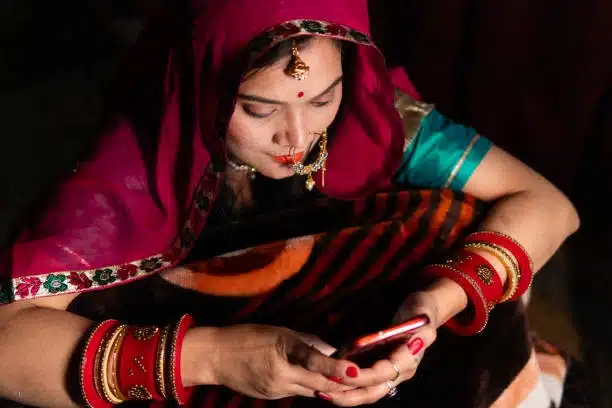
In late December 2025, a local community body in Rajasthan’s Jalore district sparked a nationwide debate on digital freedom and gender equality. The Sundhamata Patti Panchayat, representing the Chaudhary community, issued a controversial diktat affecting 15 villages. The order sought to ban the use of camera-enabled smartphones for daughters and daughters-in-law. Under the resolution, women were instructed to switch to basic keypad mobile phones for their communication needs. The restriction was originally scheduled to take full effect on January 26, 2026, coinciding with India’s Republic Day. However, the move faced immediate and intense backlash from human rights activists and social media users across the country.
The Rationale: Child Health or Social Control?
Community leaders, led by president Sujanaram Chaudhary, justified the ban by citing concerns over the physical health of children. The panchayat argued that women often give their smartphones to children to keep them distracted while performing daily chores. This practice, they claimed, led to excessive screen time that could permanently damage children’s eyesight and mental development. Additionally, elders mentioned that “reel mania” and social media addiction were disrupting traditional family values and social discipline. While these health concerns are valid in many modern societies, critics noted that the ban was exclusively gendered. Men in the same villages faced no such restrictions on their device usage or screen habits.
Scope of the Proposed Restrictions in Jalore
The proposed rules were exceptionally specific regarding when and where women could use mobile technology. If implemented, the ban would have prohibited women from carrying smartphones to weddings, social functions, or public gatherings. Even visiting a neighbor’s house with a camera-enabled phone would have been considered a violation of the community standards. The decree specifically targeted “daughters and daughters-in-law,” placing the burden of social discipline solely on the female members of the household. Feature phones, or “keypad phones,” were permitted only for voice calls to ensure women could still contact their families. This distinction highlighted a deep-seated desire to limit women’s access to the internet and visual media.

Partial Exceptions for Education and Academic Use
The panchayat did acknowledge the necessity of technology for modern education, albeit with strict limitations. School- and college-going girls were granted a partial exception to use smartphones strictly for academic purposes. However, this usage was confined to the home environment and was subject to parental supervision. Students were still barred from taking their smartphones to any social events or public spaces within the 15 affected villages. This “academic-only” clause was an attempt to balance traditional values with the undeniable need for digital literacy in 21st-century India. Despite this concession, many argued that the restriction still hampered the overall educational experience and social development of young women.
List of the 15 Villages Affected by the Diktat
The community order was intended to cover a specific cluster of villages within the Bhinmal-Khanpur area of Jalore. The 15 villages included:
- Gazipura and Pavli
- Kalda and Manojiya Vas
- Rajikavas and Datalavas
- Rajpura and Kodi
- Sidrodi and Aladi
- Ropsi and Khanadeval
- Savdhar and Hathmi ki Dhani
- Khanpur
By targeting a specific geographical and communal patti (subdivision), the elders hoped to create a unified social front. This localized enforcement is common in rural Rajasthan, where caste panchayats often hold significant informal influence over social behavior.
Backlash and Intervention by Human Rights Groups
The announcement of the ban triggered a firestorm of criticism from women’s rights organizations and civil society. Activists from groups like the Ekal Nari Sangathan pointed out the irony of the ban in the “Digital India” era. They noted that the government has spent years distributing tablets and smartphones to empower rural women through technology. Critics labeled the move as an extra-constitutional attempt to control women’s mobility and access to information. The National Human Rights Commission (NHRC) and local police authorities were urged to intervene, as the order appeared to violate constitutional rights to privacy and equality. Many pointed out that safety apps and digital payment systems are essential lifelines that keypad phones cannot support.
Withdrawal of the Ban Following Public Outrage
By late December 2025, just days after the initial proclamation, the village elders convened a second meeting to reconsider the order. Facing immense public pressure and potential legal action, the panchayat unanimously decided to withdraw the smartphone ban. Community members clarified that the decision had been “misunderstood” by the public and was originally intended as an advisory suggestion. They admitted that while the goal was to protect children, they could not legally or socially bind individuals to such a restrictive rule. The elders emphasized that the withdrawal was necessary to maintain peace and avoid further negative national attention. This reversal demonstrated the power of digital connectivity in challenging traditional patriarchal structures.
Conclusion: The Ongoing Conflict of Tradition and Technology
The case of the Jalore smartphone ban serves as a powerful case study of the tensions in rural India. It illustrates how modern technology is often viewed as a threat to traditional social hierarchies and “family honor.” While the ban was ultimately rescinded, the fact that it was proposed in 2026 highlights the persistent digital divide and gender bias in certain regions. The incident has prompted calls for greater digital literacy programs that focus on education rather than restriction. As technology becomes more integrated into daily life, these rural communities continue to grapple with the balance between heritage and progress. The future of the “Digital India” initiative depends on ensuring that technology is a tool for everyone’s empowerment, regardless of gender.
Other Articles

Streamers and the Rise of Decentralized Media in Africa
Iran Leader Declares “Full-Fledged War” With U.S., Israel and Europe