Introduction
Australia has taken a big step in cancer treatment with a new MRI machine that can target and freeze tumors without surgery. This new technology gives doctors another way to treat some patients without making large cuts or removing tissue through an operation. The treatment uses MRI guidance and extreme cold to destroy cancer cells with high accuracy.
The machine combines Magnetic Resonance Imaging (MRI) with a treatment called cryoablation. Doctors can clearly see the tumor during the procedure and place special needles into the affected area. These needles create very low temperatures that freeze and destroy the tumor while reducing damage to healthy tissue.
This new method brings hope for patients who cannot have surgery or want a less invasive treatment.
What Is the New MRI Tumor Freezing Machine?
The new MRI machine is an advanced medical system that helps doctors find and treat tumors at the same time. Instead of opening the body through surgery, doctors use MRI images to guide thin probes directly into the tumor.
The probes release extremely cold gas that forms an ice ball around the tumor. The freezing process kills cancer cells while protecting nearby healthy tissue as much as possible.
This treatment is called MRI-guided cryoablation.
How Does the Technology Work?

The treatment follows several simple steps.
Step 1: MRI Scan
Doctors first use MRI scans to locate the exact position, size, and shape of the tumor.
Step 2: Probe Placement
Very thin needles, called cryoprobes, are placed into the tumor using MRI guidance.
Step 3: Freezing Process
The probes cool to extremely low temperatures. Ice forms around the tumor, destroying the cancer cells.
Step 4: Monitoring
Doctors watch the treatment live on MRI images. They can see the ice ball growing and adjust the treatment if needed.
Step 5: Recovery
After the procedure, patients are monitored for a short time before returning home or staying overnight if needed.
Why MRI Guidance Is Important
MRI provides very clear images of soft tissues inside the body.
This allows doctors to:
- Find tumors accurately
- Guide the treatment safely
- Monitor the freezing process in real time
- Reduce injury to nearby organs
- Improve treatment precision
MRI guidance helps doctors make better decisions during the procedure.
Benefits of Freezing Tumors Without Surgery
This new treatment offers several benefits.
Less Invasive
No large surgical cuts are needed. Only small needle openings are made.
Faster Recovery
Many patients recover much faster than after traditional surgery.
Less Pain
Small needle insertions usually cause less pain than major surgery.
Lower Risk of Infection
Since there are no large wounds, the risk of infection is lower.
High Precision
MRI allows doctors to target only the tumor while protecting healthy tissue.
Short Hospital Stay
Some patients may return home on the same day.
Which Tumors Can Be Treated?
MRI-guided cryoablation may be used for several types of tumors.
These include:
- Kidney tumors
- Liver tumors
- Breast tumors
- Bone tumors
- Soft tissue tumors
- Some prostate tumors
- Certain lung tumors
The treatment is not suitable for every cancer. Doctors decide if it is the best option based on the patient’s condition.
Who Can Benefit?
This treatment may help:
- Older adults who cannot safely undergo surgery
- Patients with other health problems
- People whose tumors are difficult to reach
- Patients looking for a minimally invasive treatment
- Patients needing repeat treatment
Each patient is carefully evaluated before treatment begins.
Is the Procedure Safe?
Cryoablation has been used for many years in different hospitals. MRI guidance makes the procedure even more accurate.
Like any medical treatment, there are still some risks.
Possible risks include:
- Bleeding
- Swelling
- Minor pain
- Infection
- Damage to nearby tissues in rare cases
Doctors monitor patients closely to reduce these risks.
How Long Does the Procedure Take?
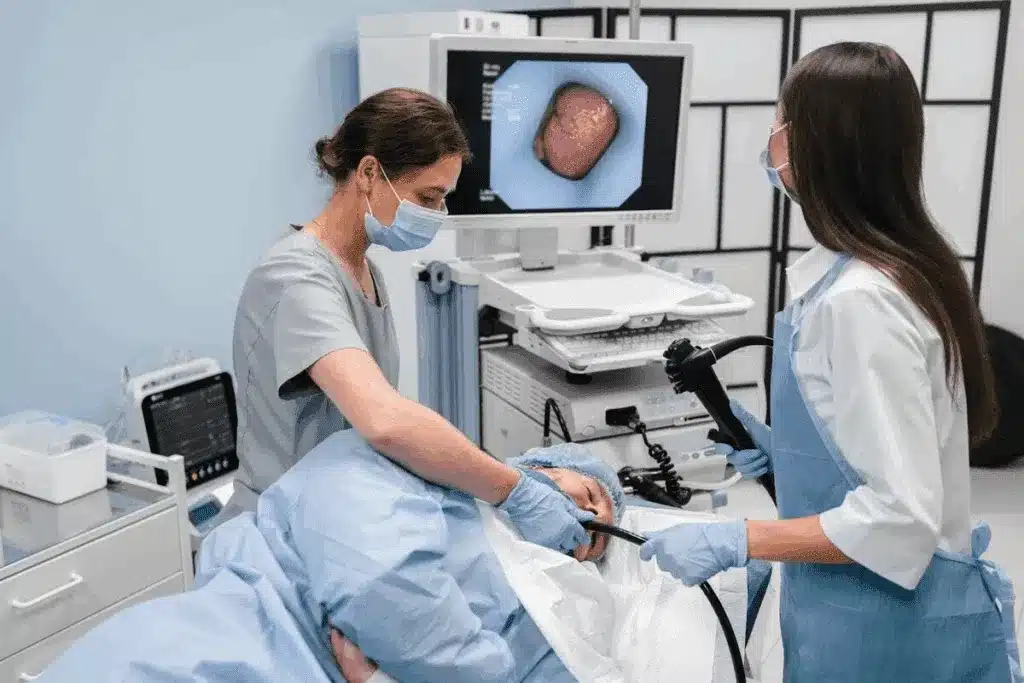
The treatment usually lasts between one and three hours, depending on:
- Tumor size
- Tumor location
- Number of tumors
- Complexity of the procedure
Most patients recover much faster than after open surgery.
Advantages Over Traditional Surgery
| MRI-Guided Cryoablation | Traditional Surgery |
|---|---|
| Small needle insertion | Large surgical incision |
| Less pain | More pain |
| Faster recovery | Longer recovery |
| Lower infection risk | Higher infection risk |
| Minimal blood loss | Greater blood loss |
| Short hospital stay | Longer hospital stay |
Challenges of the Technology
Although this treatment is promising, there are still some challenges.
These include:
- High equipment cost
- Special training for doctors
- Limited availability in hospitals
- Not suitable for every tumor
- Some patients may still need surgery or other treatments
Medical experts continue to study how this technology can help more people.
Future of MRI-Guided Tumor Treatment
Researchers believe MRI-guided cryoablation will become more common over the coming years.
Future improvements may include:
- Better imaging quality
- Faster treatment times
- Greater precision
- AI-assisted tumor targeting
- Treatment for additional cancer types
As technology improves, more hospitals may begin offering this treatment.
Why This Matters for Cancer Care
Cancer treatment has changed greatly over the past few decades.
Doctors now have many options besides traditional surgery, including:
- Radiation therapy
- Chemotherapy
- Immunotherapy
- Targeted therapy
- Cryoablation
MRI-guided tumor freezing adds another valuable option for patients and doctors. It may improve comfort, shorten recovery, and reduce the physical impact of treatment for selected patients.
Conclusion
Australia’s introduction of MRI-guided tumor freezing technology marks an important step in modern cancer care. By combining detailed MRI imaging with cryoablation, doctors can destroy some tumors without traditional surgery. The procedure offers accurate treatment, smaller wounds, quicker recovery, and less pain for suitable patients.
While this technology is not appropriate for every type of cancer, it provides another treatment option that may improve patient care. As research continues and more hospitals adopt this approach, MRI-guided tumor freezing could become an important part of future cancer treatment.
Other Articles

T-Mobile Customers Can Get a Free Drink on All Delta Flights!
Bali Says Sponsored Posts on a Tourist Visa Are Now Illegal