Europe has introduced the Entry/Exit System (EES), a new digital border system for travelers entering and leaving many European countries. The system officially started on April 10, 2026. It mainly applies to non-EU travelers visiting Europe for short stays. The goal of the EES is to make border checks faster, safer, and fully digital.
What is the Entry/Exit System (EES)?
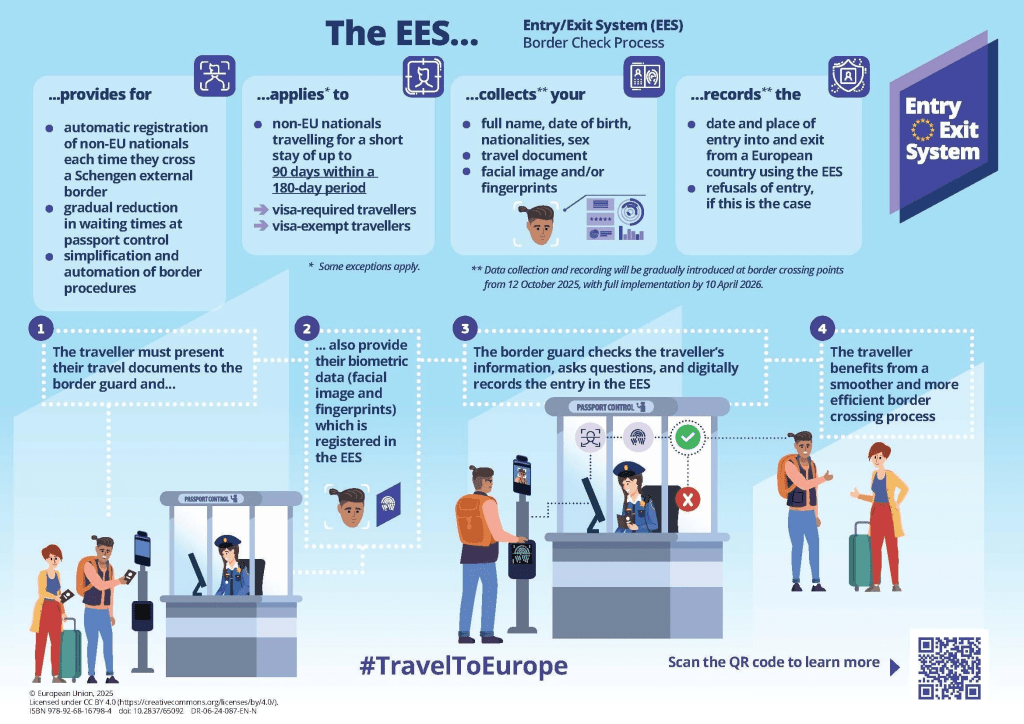
The Entry/Exit System is a digital system used at European borders. It records traveler information electronically instead of using traditional passport stamps.
When travelers enter or leave participating European countries, the system stores:
- Name and passport details
- Date and place of entry or exit
- Fingerprints and facial image
- Length of stay
This information is saved digitally in a secure database.
Why Did Europe Launch EES?
Europe launched the EES to improve border management and security. The old passport stamp system was slow and easy to misuse.
The new digital process helps authorities:
- Track visitor stays more accurately
- Reduce fake documents and identity fraud
- Improve security checks
- Speed up border crossings at airports and checkpoints
The system also helps identify travelers who stay longer than allowed.
Who Does the EES Apply To?
The EES applies to non-EU travelers entering European countries that are part of the Schengen Area for short visits.
This includes visitors from countries such as:
- Pakistan
- United States
- United Kingdom
- Canada
- India
- Australia
EU citizens and residents with valid residence permits are generally not affected in the same way.
Passport Stamps Are No Longer Needed
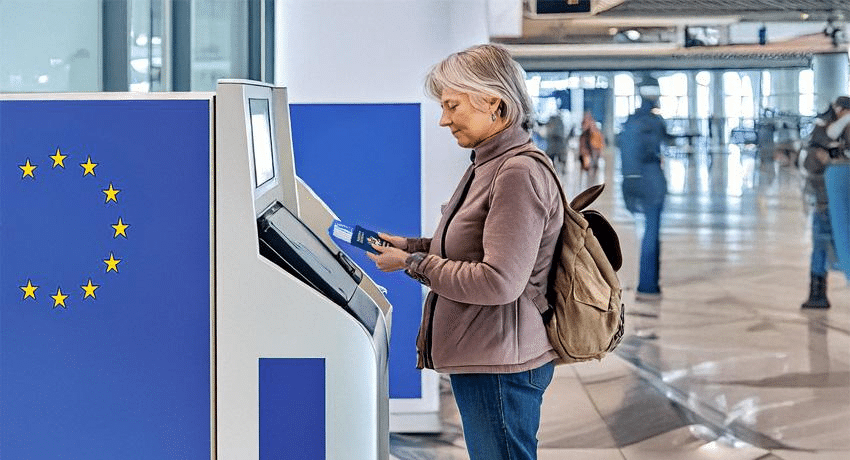
One of the biggest changes is the removal of passport stamps. Before EES, border officers manually stamped passports when travelers entered or exited Europe. Now, everything is recorded digitally.
Travelers will scan their passports at automated systems. In many cases, fingerprints and facial photos will also be taken during the process.
How Will the New System Work?
The process is simple for most travelers.
At the airport or border point:
- Present your passport
- Scan your passport at the digital kiosk
- Provide fingerprints or facial scan
- Border officers verify your details
- Entry or exit is stored digitally
The system automatically tracks how long a traveler stays in Europe.
Benefits for Travelers
The EES offers several benefits for visitors:
- Faster border checks
- Less paperwork
- Better security
- Reduced waiting time in the future
- More accurate travel records
Although some travelers may experience small delays during the first few months, the system is expected to become smoother over time.
Final Thoughts
The Entry/Exit System (EES) is a major step in Europe’s move toward digital travel management. Since its launch on April 10, 2026, non-EU travelers now go through a fully digital border process instead of receiving passport stamps.
If you plan to visit Europe, it is a good idea to stay updated about EES rules and carry valid travel documents before your trip.