
Most sites of significance of the Civil Rights Movement are situated there, where he can stroll where history-makers strolled, hear the struggle for equal rights, and remember the constantly unfolding quest for justice.
Montgomery, Alabama: The Cradle of the Movement
This is one of the churches that people go to on pilgrimage so they can walk through, look around, and see where they can catch a glimpse of the pulpit that King spoke at and locate the religious origins of the movement. The museum chronicles the incredible history of the bus boycott and Parks’ celebrity as the “mother of the Civil Rights Movement.”
- Civil Rights Memorial Center: Maya Lin, the architect who designed the Vietnam Veterans Memorial, built this memorial to honor those who had lost their lives while seeking freedom. The monument is a black granite circular table with the roll of the dead from 1954 to 1968.
Selma, Alabama: The Bridge of Freedom
Just 50 miles south of Montgomery, voting rights engulfed Selma. The Selma to Montgomery marches in 1965 put racial disparity in the South on national center stage.
- Edmund Pettus Bridge: It’s a site of triumph and brutality simply because it’s the location of “Bloody Sunday.” It’s where police officials attacked nonviolent civil rights marchers. It’s a symbolic ritual walk for those marking the movement to cross the bridge.
- National Voting Rights Museum and Institute: Across the bridge where it sits, the museum considers the African American struggle towards victory in victory at gaining voting rights and pays tribute to the heroism of marchers who, along the stretch between Montgomery and Selma, went down in history.
Birmingham, Alabama: Ground Zero of Struggle
Because Birmingham was the location of many of the movement’s most critical battles, the monuments also serve as a reminder of what was lost so that justice might be served.
- 16th Street Baptist Church: Annihilating the nation’s life and infuriating the Civil Rights Movement. The church is still an active congregation and shrine.
- Birmingham Civil Rights Institute: This is a museum and library with an extensive collection of memorabilia on the civil rights movement, nationwide and locally.
- Kelly Ingram Park: A church and museum are next to the park where the marchers walked around in a circle. Statues depict police brutality, and protesting are down the park sidewalk.
Washington, D.C.: The National Platform
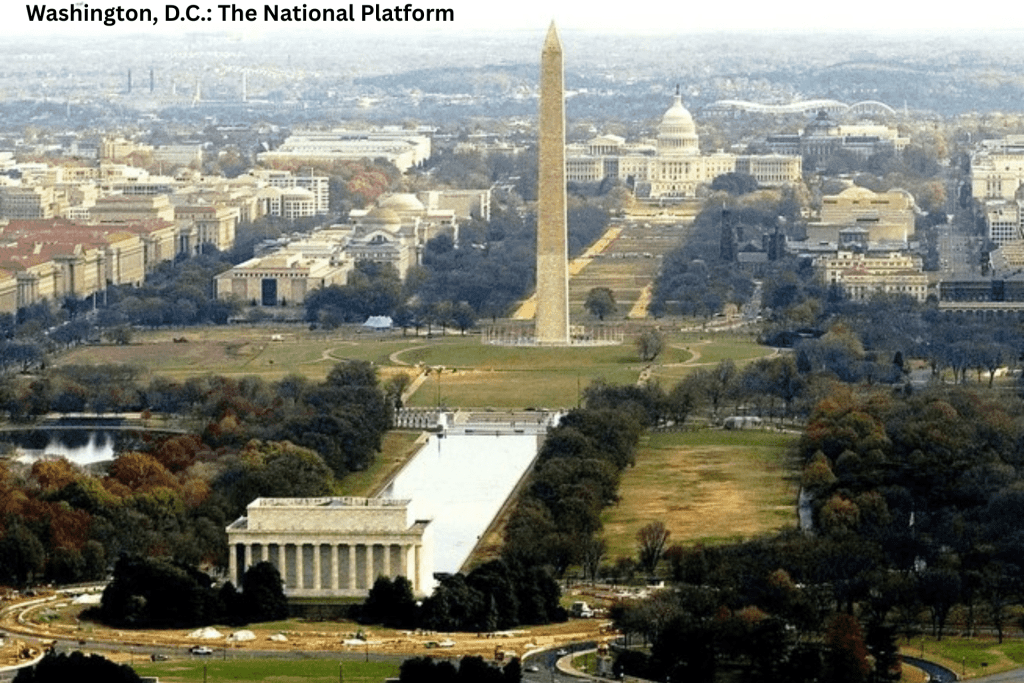
Washington, D.C., the national capital, was the site of most of the movement’s most important activities.
- Lincoln Memorial: On Aug. 28, 1963, Dr. King also stood here, delivering his “I Have a Dream” speech on the steps of the March on Washington for Jobs and Freedom. The memorial remains a hallowed place of side-by-side passing.
- Martin Luther King Jr. Memorial: The 2011 National Mall memorial is a massive King statue encircled by the quotes of his best statements.
- African American Civil War Memorial and Museum: It had a regressive sensibility in the past but now commemorates the African American soldiers who fought and perished for pursuing freedom, yet are brought back to life through this memorial in a way that war service history is replete with struggle for equality.
Little Rock, Arkansas: Education and Integration
Little Rock Central High School National Historic Site: In 1957, nine African American students integrated the previously all-white school, which is now under federal protection. The park is an open school that features guided tours and educational exhibits.
Greensboro, North Carolina: Sit-In for Change
- International Civil Rights Center & Museum: Though African American student protesters occupied the original Woolworth’s whites-only lunch counter in 1960, the museum recreates the act with fastidious attention to detail and participants’ recollections.
- Medgar Evers Home Museum: The NAACP field secretary who was murdered in 1963 lived in the modest house. It’s maintained how he left it, a reminder to the man and his cause.
- Mississippi Civil Rights Museum: This is the state’s museum that examines institutional racism and resistance to it. It offers an interactive history through oral history and interactive programming.
Other Sites Worth Visiting
St. Augustine, Florida: A Southwide location of civil rights demonstrations. Sites like the Lincolnville Historic District keep memories intact.
Conclusion: Pilgrimages of Purpose
Much more along the pilgrims’ way of the Civil Rights Movement than in the footsteps of the way, is along the way in the eyes. The locations provide more than history; they provide emotional, spiritual, and educational experiences where past converges with present.
- They remind us that it was a movement because of the ordinary people who made the extraordinary possible. All those protest marches, Sunday sermons, courtroom fights, and acts of civil disobedience bent the moral arc of history toward justice.
- Walking there, they were not called to recall but to act. Coming home from there is a call of purpose—calling us to complete the unfinished work of equality and human rights for everyone.
Other Articles

