
Introduction
pageants in recent decades, but there has been a new trend of rising antisemitism in the form of hate speech, violence, and radical thoughts all over the world. The United States, where one of the largest Jewish communities in the world resides, was no exception, either. In rebuttal, the Department of Homeland Security (DHS) suggested increasing vetting processes among immigrants with particular emphasis on identifying antisemitic feelings within social media behaviour. This policy measure has been among the most contentious proposals as part of a general attempt to restrict hate speech and promote social cohesion. Proponents say that it’s a necessary protection against exporting hate and extremism, and critics worry about civil liberties, possible discrimination, and the feasibility of monitoring social media expression. This essay deals with the argument, implications, controversy, and ethical issues regarding the DHS’s proposed screening of immigrants’ social media for antisemitism.
Background and Policy Context
Antisemitism has not sprung up overnight; it is of the very deepest of historical roots and has led to unimaginable occurrences, such as the Holocaust. Antisemitic activity grew in quite a big way recently worldwide and even within America.
- In this regard, the DHS considers social media an important resource in screening foreign nationals who desire to enter the United States. After a string of terrorist attacks in the 2010s that had involved those who were radicalised through the internet, the Obama administration had already heightened the collection of social media handles from specific visa applicants. The Trump administration heightened the process further by mandating nearly all visa applicants to provide their social media handles for the past five years. The practice has continued, and DHS screens these accounts for links to extremist ideologies, violence, and potential national security threats.
Defining and Identifying Antisemitism
One of the most daunting tasks the policy must contend with is defining what constitutes antisemitism in the context of social media posts.
Denying the Holocaust
- Accusing Jewish people as a group of committing actual or alleged misdeeds
- Using traditional antisemitic tropes of Jewish power, control, or greed
- Demonising Israel in ways that delegitimise its existence or judge it by a double standard
- However, it isn’t easy to utilise such definitions in practice. Internet speech is decontextualised, typically imprecise, and may include sarcasm, satire, or translation errors. Discrimination between criticism of Israeli government policy and antisemitism is especially challenging. Critics predict that open definitions will be used as a political tool against political activists, especially for Palestinian rights.
- To find such speech, DHS would look to a mix of AI tools, keyword tracking, sentiment analysis, and human analysts. Algorithms can identify posts with potentially antisemitic language, and analysts consider context. The plan is not perfect, however. Algorithms have difficulty with nuance, cultural variations, and idioms, creating false positives and subjective interpretation problems.
Legal and Ethical Considerations
First Amendment and Free Speech
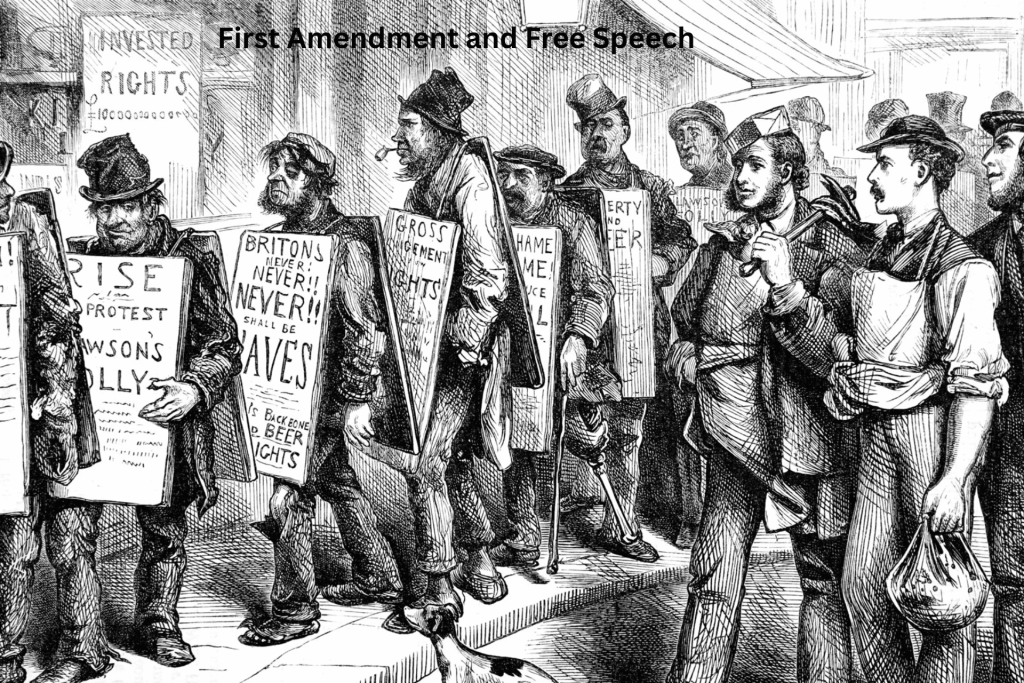
Even though the U.S. Constitution guarantees free speech under the First Amendment, the same rights are not given in the same manner to foreign nationals trying to enter the country. The law courts have firmly established that foreign nationals do not have any constitutional privilege of entering the United States. But that does not mean that screening policies have no surveillance.
Discrimination and Profiling
The other issue is that social media antisemitism filtering might disproportionately affect Muslim-majority countries’ immigrants, especially those holding active political opinions about the Middle East. Critics worry that the policy might be utilised to mask religious or ethnic bias as the suppression of hate speech.
Historically, counterterrorism has sometimes manifested as the profiling of Muslim immigrants, as in the post-9/11 years. A response specifically aimed at expressions of political solidarity with Palestinians is also likely to enhance perceptions of unfairness and cement the perception of exclusion of already-discriminated-against groups.
Privacy and Surveillance
Privacy is the primary issue. Even though the applicants willingly provide social media identifiers, they might not know to what extent their internet lives will be monitored. Moreover, tracking people’s previous posts can constrain free speech worldwide if publicly exposed. People might refrain from debating controversial matters on the web because it might impact their immigration prospects.
- Second, critics maintain that social media account scraping is a matter of due process concerns. Who makes the determinations of what is antisemitic? Can people appeal against these decisions? What are the protections against abuse or mistake?
Possible Benefits and Justifications
Despite the concern, the policy supporters think it is justified and within reason concerning the threat. They believe that antisemitism screening deters the introduction of ideologies that can promote regional extremism. When an individual openly adheres to violent, hateful, or prejudiced ideologies against Jews, it is proper to question whether such individuals should be allowed the privilege of entry or residency in the U.S.
- DHS already screens for terrorist group affiliations, violence incitement, or criminal history. Its extension to antisemitic ideology, in the eyes of the sponsors, is a natural progression, especially considering the real-world impact of hate speech. Antisemitic ideologies are not innocuous opinions—history has shown that they turn violent, and their rejection in the name of impartiality can prove dangerous.
- Secondly, screening would serve as a deterrent. Individuals would not upload or share such sentiments on the internet because they know hateful speech has ramifications. It will also assure Jewish communities in America that their government is taking action to safeguard them.
Practical and Technical Challenges
The scope of screening for such an effort is gigantic. Hundreds of thousands of visa applicants post their social media addresses annually. Screening them all for antisemitism—particularly in so many languages, dialects, and cultural environments—is a challenge.
- Even for the DHS, there are misinterpretation risks, even when using AI tools. Sarcasm and irony tweets, posts, and reposts, memes, can be misinterpreted out of context. Additionally, users can modify their handles, delete an account, or make their posts private. Others will even use encrypted or anonymous websites to make it almost impossible to detect.
- There is also the question of quantity. To successfully screen, the DHS would need enormous staffing and technical capacity. The agency currently has backlogs in processing immigration filings; adding another screening level would further delay the process and be more expensive.

